Four mechanisms, four published findings. What each one does, the problem it removes, and the work it is built on.
Proof-Gating
Nothing unlocks until you can produce the answer yourself.
The problem it removes
Fluency is not ability. A fluent answer feels like progress, so you leave with the illusion of competence.
The research under it
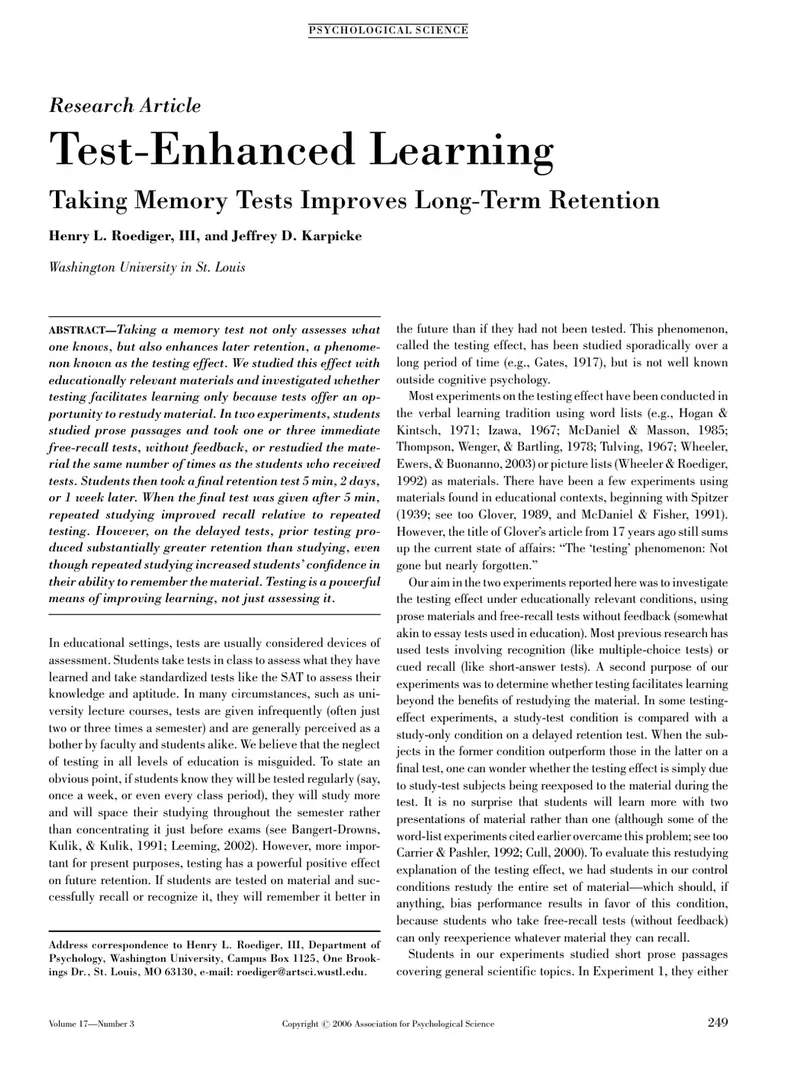
Testing effect. Roediger & Karpicke (2006) showed that retrieval produces far more durable memory than rereading, and rereading is exactly what inflates confidence.
A hidden Markov model re-estimates every skill after each graded answer.
The problem it removes
A final exam is an autopsy. It tells you what you lost after the term, not what you know right now.
The research under it
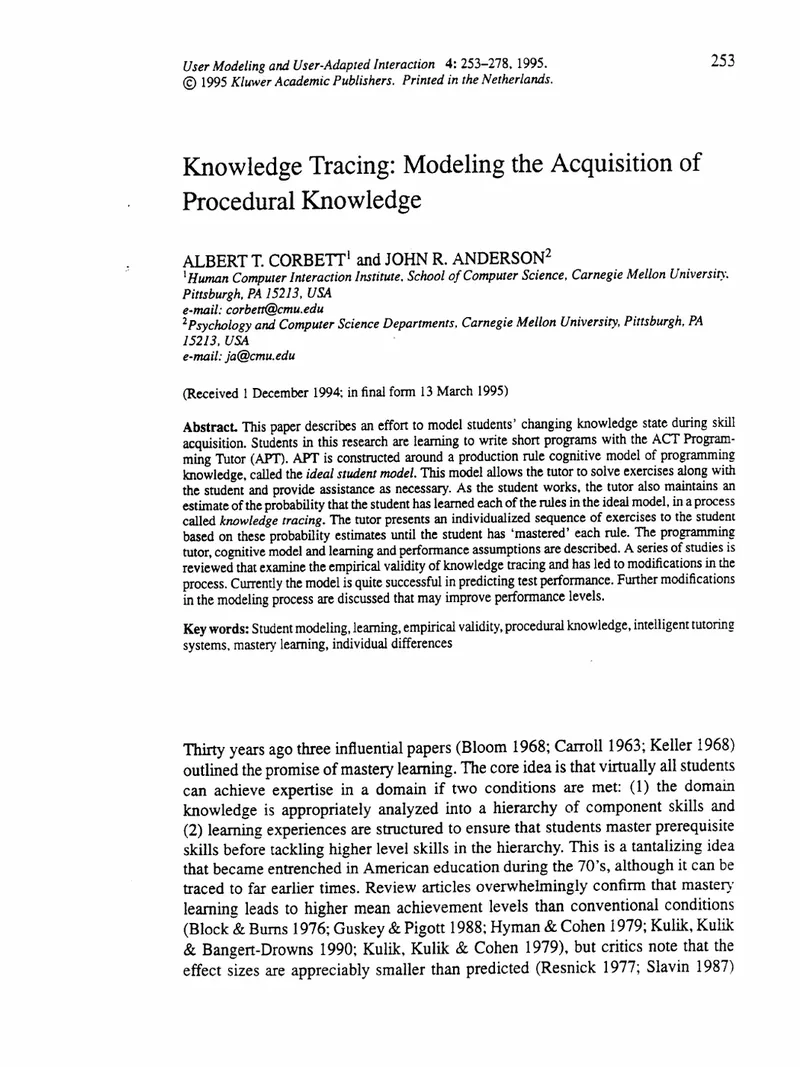
Bayesian knowledge tracing. Corbett & Anderson (1994) set the mathematical origin in hidden Markov state transitions over whether a skill has been learned.
Bayesian Knowledge TracingCorbett & Anderson (1994) · Knowledge Tracing: Modeling the Acquisition of Procedural Knowledge · User Modeling and User-Adapted Interaction 4, 253–278
Q-Matrix Diagnosis
Every item declares the atomic skills it needs, so a miss is charged to a skill, not to a page.
The problem it removes
A mistake notebook records that you were wrong. It never tells you which atomic skill is stuck.
The research under it
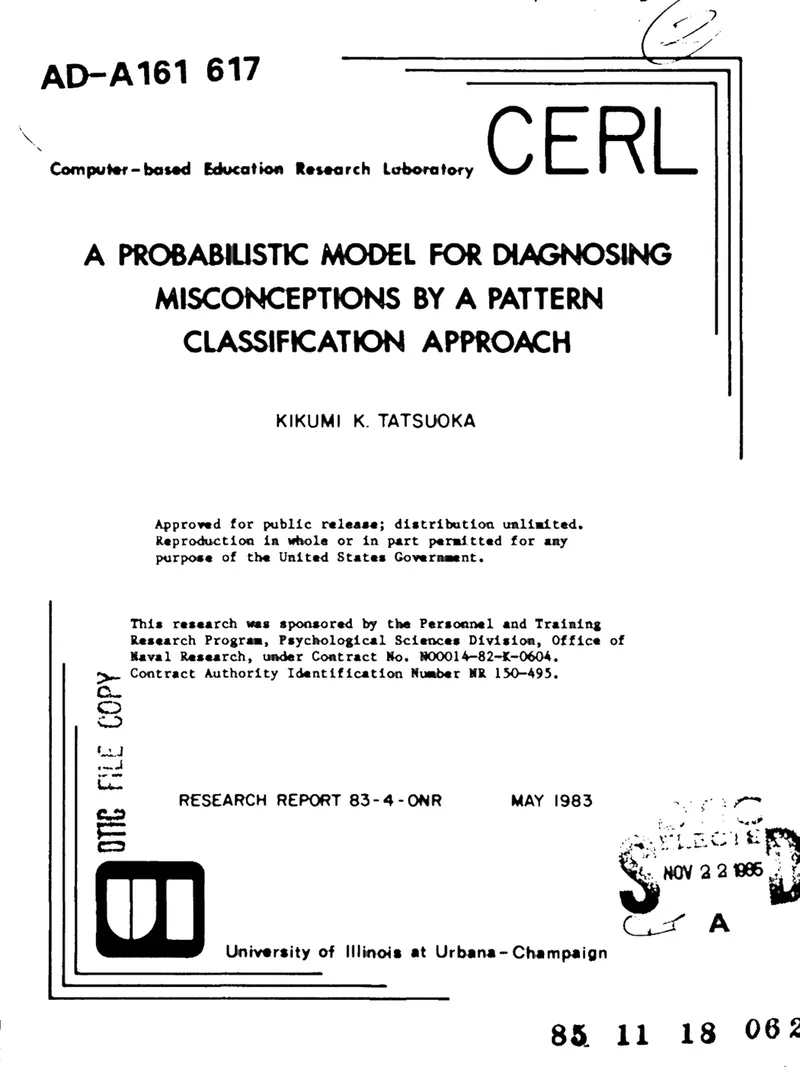
Cognitive diagnosis models (DINA). Tatsuoka (1983) introduced the Q-matrix, mapping each item onto the cognitive attributes it requires.
Q-Matrix DiagnosisTatsuoka (1983) · A Probabilistic Model for Diagnosing Misconceptions by a Pattern Classification Approach · CERL Research Report 83-4-ONR, University of Illinois
FSRS & Mastery Decay
Reviews land just before a skill decays, and mastery is re-verified instead of assumed.
The problem it removes
Mastery treated as a one-off achievement. You pass once, then quietly lose it.
The research under it
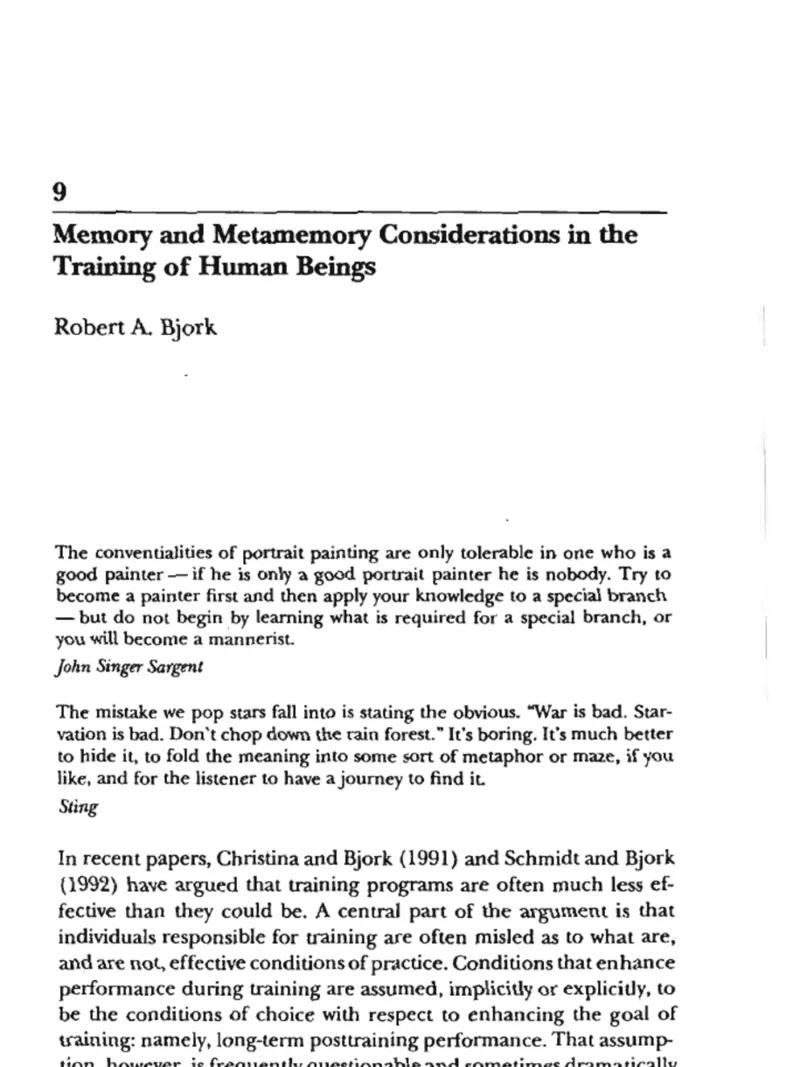
Spacing effect and desirable difficulty. Bjork (1994) showed that the necessary struggle during learning is what makes memory last.
FSRS & Mastery DecayBjork (1994) · Memory and Metamemory Considerations in the Training of Human Beings · Metacognition: Knowing about Knowing, MIT Press, 185–205
01 / 04
A summary is not a skill.
The same textbook, two ways to study it.
Hand it to a chatbot
You get a fluent wall of text
Calculus
Calculus: Early Transcendentals · 824 pages · 11 chapters
Teach me this book and summarize the key points.
Chapter 1, Functions, limits and continuityDerivatives, from the definition to the rules, the chain rule and implicit differentiationApplications, from related rates to optimization and curve sketchingIntegration, from substitution and parts to partial fractions and improper integralsSeries, from convergence tests to Taylor and Maclaurin expansions…1,842 words later, the book has been “taught”.
Words read
1,842
Problems attempted
0
Skills verified
0
Learn it in Snowfield
You produce the answer, or nothing unlocks
Use the definition of the Darboux integral to compute ∫₀¹ x² dx.
Your attemptSplit [0,1] into n equal parts, take sup and inf on each part, then let n → ∞.
Worked solution, locked until your attempt is graded
Hints only. The next question, never the final answer
The miss is charged to one atomic skill by the Q-matrix